Jan 8
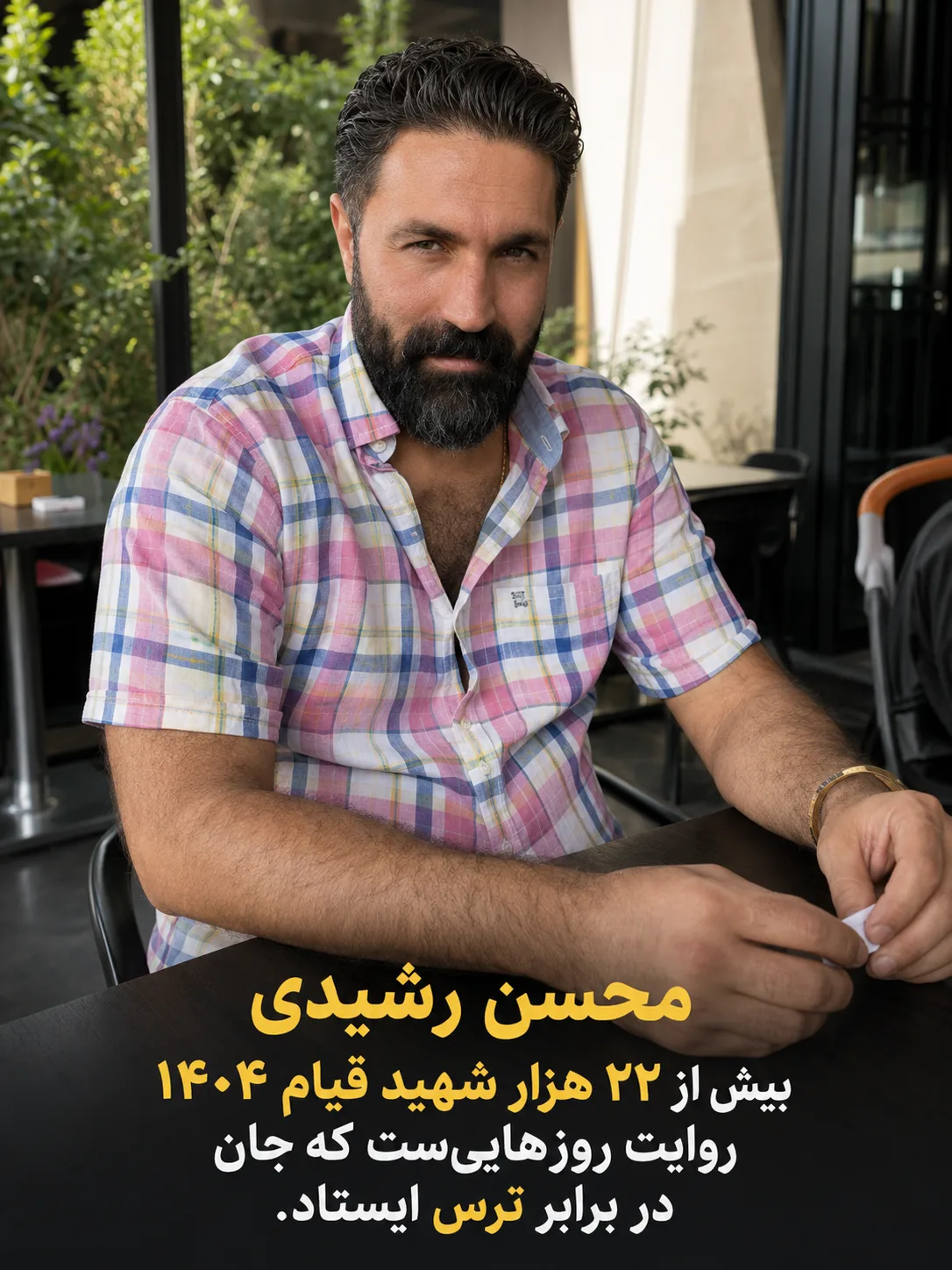
Mohsen Rashidi Khaniabadi
Mohsen was 42 years old. He was of Bakhtiari heritage and was born in Isfahan. His father was executed by the Islamic Republic in 1991, and at the age of eight he experienced the loss of his father. He had two sisters and three brothers, for whom he became a father figure and the family's breadwinner. He was married and had two adopted daughters, aged 19 and 20, to whom he had been a true father since they were three years old, as well as a four-year-old daughter. On the 19th of Dey, when the friend accompanying him said, "They're using live ammunition. Let's move back," Mohsen replied, "My conscience won't let me leave these young people from the 2000s generation alone." As he was leaving home, he told his wife and mother, "Goodbye, this may be our last meeting." He constantly encouraged his friends and loved ones to take part in the protests, saying, "If I don't go, and you don't go, then who is going to stand up against oppression and injustice?" Mohsen was an athlete, an art lover, and a designer who enjoyed singing. He was a knowledgeable man with a great passion for reading books. He was deeply compassionate, generous, and always willing to help others.
- Age
- 42
- City
- Baharestan
- Date
- 2026-01-09
- All statuses
- Verified
Life story
Mohsen was 42 years old. He was of Bakhtiari heritage and was born in Isfahan. His father was executed by the Islamic Republic in 1991, and at the age of eight he experienced the loss of his father. He had two sisters and three brothers, for whom he became a father figure and the family's breadwinner. He was married and had two adopted daughters, aged 19 and 20, to whom he had been a true father since they were three years old, as well as a four-year-old daughter. On the 19th of Dey, when the friend accompanying him said, "They're using live ammunition. Let's move back," Mohsen replied, "My conscience won't let me leave these young people from the 2000s generation alone." As he was leaving home, he told his wife and mother, "Goodbye, this may be our last meeting." He constantly encouraged his friends and loved ones to take part in the protests, saying, "If I don't go, and you don't go, then who is going to stand up against oppression and injustice?" Mohsen was an athlete, an art lover, and a designer who enjoyed singing. He was a knowledgeable man with a great passion for reading books. He was deeply compassionate, generous, and always willing to help others.
Incident summary
There is no precise information available about the day of the incident. However, according to accounts, Mohsen went to help an injured person when he was shot in the leg with live ammunition. During the ensuing pursuit through one of the neighborhoods of Baharestan, security forces on motorcycles shot him in the side and abducted him. After searching hospitals, morgues, detention centers, and other places, his family endured days of hardship, alternating between despair and hope. On the 23rd of Dey, they finally identified his body at Bagh-e Rezvan Cemetery in Isfahan. His funeral was held under heavy security, and the family was only allowed to see and bid farewell to Mohsen's face and head down to his neck. For nearly five months, Mohsen's grave remained without a headstone because the authorities objected to the inscription the family wished to place on it. His wife also said that they would not install a headstone until permission was granted, and they brought attention to the issue publicly. After five months, they were finally allowed to install the headstone.
Memorial narrative
You will live forever in me and in my homeland.